A devastating militant attack in the remote village of Ngoshe, Borno State, Nigeria, has left communities grieving and displaced as families struggle to cope with loss, fear, and uncertainty. Local officials and residents describe “massive” numbers of civilians killed and hundreds abducted in violence that struck as families were breaking their Ramadan fast.
Senator Mohammed Ali Ndume, speaking to the BBC, said there were “massive” casualties but that precise figures were not yet available because information from the ground is still coming in. “We rely on local leaders and residents,” he told reporters. Local journalist Umaru Yakubu Kirawa confirmed villagers were taken by the attackers and said survivors are urgently calling for reinforcements and humanitarian support.
Ngoshe, a predominantly rural community, has been rebuilding from displacement and insecurity in recent years - making this fresh violence all the more heartbreaking. For many residents, this was the first time they felt safe after returning home, only to see their peace shattered again. The militants also attacked a military base and a camp for internally displaced people, killing both civilians and soldiers, and at times held control of the town for days before government forces dislodged them with air strikes and ground operations.
This attack is part of a broader pattern of violence in northeastern Nigeria. Extremist groups such as Boko Haram and Islamic State West Africa Province (ISWAP) have repeatedly targeted villages, forcing thousands to flee their homes and disrupting lives, livelihoods, and basic services. Previous mass abductions and assaults in Borno have left indelible scars, and the memory of past atrocities looms in the minds of many.
Amid the suffering, local authorities are conducting search-and-rescue operations, distributing food and supplies, and pledging support for families who have lost loved ones. The human cost of violence is immense: mothers weep for children lost, elders mourn whole families gone, and communities yearn for safety they have not known in years.
The church is called to stand in prayer for these communities. Lifting up families, protection for the vulnerable, courage for responders, and the hope that only God can bring. The focus is on human life, healing, and God’s presence in the midst of fear.
1. Pray for Grieving Families and Displaced Civilians
Lord, comfort those who mourn, provide for every need, and let Your peace guard shaking hearts. Uphold the broken and strengthen those rebuilding their lives, entrusting all to Your care.
“The Lord is close to the broken-hearted and saves those who are crushed in spirit.” Psalm 34:18
2. Pray for Safety and Rescue
Father, protect every civilian under threat. Shield the abducted, bring them home, and surround families with Your refuge. May Your presence be near in every anxious hour.
“He will cover you with his feathers, and under his wings you will find refuge.” Psalm 91:4
3. Pray for Responders and Leaders
Heavenly Father, grant courage and discernment to responders and leaders. Steward every decision with compassion, bring swift justice, and guide efforts to protect communities with Your protection.
“The king’s heart is in the hand of the Lord; he directs it like a watercourse wherever he pleases.” Proverbs 21:1
Summary Prayer
Lord, we lift up the people of Ngoshe and all affected by this violence. Comfort the grieving, rescue those taken, protect families, and guide leaders with insight. May Your peace fill every heart and bring hope amid fear. Amen.
More Information:
- BBC - Massive numbers killed in latest Nigeria attack, senator tells BBC https://www.bbc.com/news/articles/c1d69z3p9g2o
- AP - Islamic militants abduct over 300 in northeastern Nigeria amid rising insecurity
https://www.the-star.co.ke/news/africa/2026-03-08-massive-numbers-killed-by-gunmen-in-latest-nigeria-attack?utm_
• Al Jazeera - Nigeria insurgency continues in Borno State and beyond
https://www.newindianexpress.com/world/2026/Mar/07/islamic-militants-abduct-over-300-in-northeastern-nigeria-amid-rising-insecurity?utm_
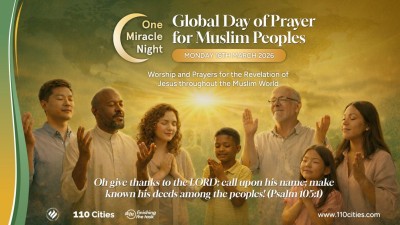
On Monday, March 16, 2026, starting at 9am EST, millions of believers across the globe will unite for one extraordinary purpose — praying for 24 Hours for the revelation of Jesus throughout the Muslim world.
We call this occasion “One Miracle Night.”
What is this night? On the 27th night of their fast, Muslims believe one night in particular is set apart from the others, a night when the heavens open and prayers are thought to be 1,000 times more powerful. They call it the “Night of Power,” but we are believing God for it to be “One Miracle Night” when His love and truth break through!
 As house church believers walk, pray, and declare that Jesus is Lord in their cities, we will join them in bold prayer!
Together, we will ask the One True God to reveal Himself to Muslims through dreams, visions, Scripture, and conversations.
We have produced a ‘One Miracle Night’ Prayer Guide that is available in multiple languages online HERE
We are encouraging everyone to pray where they are - at home, at church, at cell groups, at work or in houses of prayer! Pray solo, in couples, as families, and devote some time in worship and prayer, upholding Muslim peoples in 7 key cities and regions of the world.
All are welcome to join us online along with our Global Family 24-7 Prayer community, who will be praying with us across the 24 hours.
Register to join us in the Global Family 24-7 online Prayer Room HERE
‘New Songs!’
Once again, we are pleased to bring to you a worship song written especially for One Miracle Night entitled ‘Call Upon His Name’. This inspirational worship song is being launched on the Global Day of Prayer!
In response to a plea from the underground church, leaders of our partner Church Planting Network are distributing 9,000 new worship songs in their mother tongues to them! We are delighted to bring you some of these songs, to enrich your prayers and worship.
Let's be praying for Kingdom breakthrough across these key Muslim world cities!
This will be the second of our 5 worldwide days of prayer for 2026! – Watch this Intro Video!
The ‘Until the Veil is Lifted’ 7-Day Prayer Guide for Muslim Peoples is designed to help individuals, families, prayer groups, and churches engage meaningfully in prayer for Muslim peoples in the week leading up to One Miracle Night - the Global Day of Prayer for Muslim Peoples on Monday 16th March 2026.
It offers both biblical depth and practical structure, making it easy to use whether you have five minutes or an extended time set aside for intercession.
The guide is arranged as a day-by-day journey, covering seven locations and themes across the Muslim world.
Each day focuses on a real place, real people, and a real story, helping prayers move beyond statistics to compassion-filled, informed intercession.
The journey includes Indonesia, Pakistan, Morocco, Niger, UAE, Ethiopia and Yemen, with links to 110 Cities and Prayercast resources to encourage continued prayer throughout the year .
Each daily section follows a consistent and easy-to-navigate format:
- A short context-setting story or testimony showing how God is at work among Muslim peoples
- Key prayer points focused on discipleship, family life, compassion, breakthrough, and Gospel access
- Selected Bible passages to anchor prayer firmly in Scripture
- A brief personal application question, inviting reflection and obedience
- A highlighted city focus, connecting local stories to God’s wider mission in the world
This structure allows the guide to be used flexibly. It works well for personal daily devotion, family prayer times, small groups, or corporate prayer gatherings. Some may choose to pray through one section each day, while others may use the stories and prayer points as a framework for longer worship-based prayer sessions.
The guide also intentionally prepares hearts for the One Miracle Night - Global Day of Prayer, helping intercessors build faith, understanding, and spiritual momentum. Rather than focusing on religious systems, it highlights Jesus’ love, compassion, power, and sufficiency, calling believers to pray with hope and confidence.
Ultimately, this guide is an invitation to stand with God’s heart for Muslim peoples—believing that as the Church prays, the light of Christ will continue to break through homes, families, cities, and nations.
‘Until the Veil is Lifted’ has been published in 30+ languages (online), and is available for free, from the 110 Cities website.
 Childrens Prayer Guide…
2BC in partnership with the IPC Media Team have published a companion Childrens Guide entitled Shine for Jesus! that includes songs, daily stories and ‘Justin’s Thoughts’ written by Justin Gunawan.
This colourful Children’s Prayer Guide for Muslim Peoples invites children aged 6–12 on a seven-day prayer journey around the world, meeting real-life children and families living in Muslim cultures.
Each day focuses on a different place—such as Medan, Peshawar, Marrakech, Niamey, Dubai, Addis Ababa and Sanaa—using engaging stories, simple explanations, prayer points, Bible verses, and fun language activities.
Children learn what daily life is like, what people believe, and why knowing Jesus matters.
Families can use the guide together at breakfast, bedtime, or family prayer time—reading a story, learning a new word, praying short prayers, and asking God to show His love to others.
It works brilliantly for family devotions, children’s groups, or individual reading, helping children grow in compassion, faith, and confidence to pray big prayers together for the Muslim world.
Read and download ‘Shine for Jesus!’ in multiple languages HERE
Join Us Anytime: A Year of Daily Prayer Rooted in God’s Word
It’s never too late to say YES to prayer!
Wherever you are in the year, we invite you to join believers around the world in a simple but powerful daily rhythm: praying God’s Word into real-life situations across the nations.
In partnership with YouVersion, we’re inviting you to take part in Praying God’s Word: A 365-Day Guide for the World — a Scripture-based prayer journey you can begin today, not just at the start of the year.
This flexible, year-long plan guides you day by day through the Bible while focusing your prayers on frontline workers and communities in 110 strategic gateway cities across some of the least-reached regions of the world.
Each day includes a short Bible passage, a specific person or team to pray for, and a clear, faith-filled prayer that connects God’s Word to what’s happening on the ground right now.
As you pray, you’ll be standing with those who are sharing the Gospel, translating Scripture, planting churches, making disciples, and serving the poor and broken — often in challenging and unseen places. It’s an invitation to align your daily devotional life with God’s global mission and to let Scripture shape your prayers for the nations.
 Whether you commit to praying every day or simply start where you are, your prayers matter. Together, as thousands unite around God’s Word, we believe the Holy Spirit will bring encouragement, breakthrough, and lasting fruit.
Start the 365-day plan today – Click, or scan the QR Code
[https://www.bible.com/reading-plans/64200-365-prayers-to-change-the-world](https://www.bible.com/reading-plans/64200-365-prayers-to-change-the-world)
Thank you for lifting up Jesus among the nations and for walking with us in faithful, strategic prayer — one day at a time.
By Tom Victor
Shine! 24 Hours – Raising Up 2BC Champions
Tuesday 14th April 2026 | Praying with and for children and youth across Ethiopia!
“Rise, shine, for your light has come, and the glory of the Lord rises upon you.” (Isaiah 60:1)
Shine! is more than a 24-hour prayer event. At its heart, Shine! is about children and young people becoming 2BC Champions — learning to hear the voice of their Heavenly Father, discovering who they are in Christ, and confidently sharing God’s love with their friends and families.
This focus is shaping everything we do through the 2BC movement.
See the March Shine! Prayer Guides HERE
1️⃣ Shine! Begins with Children Becoming 2BC Champions
 The first purpose of Shine! is discipleship and identity. Through child-led worship, prayer, creativity and Scripture, children are encouraged to:
- Listen to God’s voice
- Grow secure in their identity as God’s beloved children
- Step out in simple, faith-filled ways to share Jesus’ love
Shine! creates a safe, joyful space where children lead, families participate, and faith becomes something lived — not just talked about.
2️⃣ Praying for Children in the World’s Most Populous Nations
Each Shine! event also carries a clear global prayer focus.
On Tuesday 14th April, we will be praying especially for children and young people across Ethiopia.
Together, children around the world will pray that Ethiopian children:
- Encounter Jesus personally
- Are surrounded by godly families and communities
- Grow up knowing hope, purpose and God’s love
This is children praying for children — heart to heart, nation to nation.
3️⃣ Praying for the Light of the World movie to Reach Families Everywhere
 Finally, we will continue to pray for the global impact of the beautifully hand-drawn animated film Light of the World, created to share the Gospel of Jesus with children and families worldwide.
The film is being translated into scores of languages and released across many nations, with a clear Gospel invitation and free discipleship resources. It is a powerful tool to help children grow as 2BC Champions — knowing Jesus and making Him known.
Join the Shine! Zoom Call!
Shine! runs for 24 hours, with participation of children and young people across multiple nations, including:
- Online prayer hours
- Offline family, church and small-group gatherings
- Free Shine! resources including Prayer Guides, B.L.E.S.S. cards and worship songs
You can join for an hour, or host your own gathering at home or church.
If you are a child… love children… or were once a child — Shine! is for you.
See the extremely encouraging summary of recent feedback from Shine! Participants HERE
See the March Shine! Prayer Guides HERE
Find out more, access resources, and sign up:
www.2bc.world/shine
2BC — Every Child. Everywhere. On Mission. With God.
This week, we have released part 2 of the 7 Keys to Effective Prayer – entitled ‘Abiding in Christ’.
Prayer is at the heart of the Christian life — yet many believers quietly wonder if they are really praying effectively. Why do some prayers seem to shape history, while others feel unfocused or weary? How do we persevere in prayer when answers are delayed, opposition is strong, or the world feels overwhelming?
The 7 Keys to Effective Prayer podcast series is an invitation to rediscover prayer as God intended it: rooted in Scripture, sustained by faith, and aligned with His purposes for the nations.
Hosted by Dr. Jason Hubbard, Director of International Prayer Connect, this seven-part teaching series draws on biblical foundations, historic prayer movements, and decades of experience mobilising prayer around the world. Jason brings clarity, depth, and pastoral warmth as he explores seven essential principles that help believers pray with confidence, persistence, and purpose.
These teachings are inspired in part by the remarkable legacy of the Moravian community at Herrnhut, Germany, led by Count Zinzendorf — a movement where believers committed to continuous, day-and-night prayer for over one hundred years, sparking extraordinary missionary fruit across the nations. Their story reminds us that when prayer is anchored in God’s heart, sustained over time, and shared by a community, it becomes a powerful force for spiritual transformation.
Each episode focuses on one key, offering biblical insight and practical encouragement for personal and corporate prayer:
The Seven Keys
- Worship Based Prayer
- Abiding in Christ
- Asking in Jesus’ Name
- Praying God’s Word
- Breakthrough Prayer
- Desperate Prayer
- Unceasing Prayer
The 7 Keys to Effective Prayer podcast launched on 1 March 2026, with new episodes released weekly. Listeners are encouraged not only to listen, but to reflect, apply, and allow the Holy Spirit to deepen their own prayer lives.
We invite you to discover the life-changing power of 'Abiding in Christ'. This second session explores prayer as deep relationship, not striving — drawing near to Jesus, receiving His love, and bearing lasting fruit through daily fellowship with Him.
Our prayer is simple: that through this series, believers around the world will be freshly equipped to pray — faithfully, biblically, and expectantly — and to see God move in ways that bring glory to Jesus and advance His Kingdom.
Join the Global Family 24-7 Prayer Room: A Worldwide Cry for Revival and Harvest
What if your prayer life could join with believers from every continent, every denomination, and every generation in one unceasing, worship-saturated chorus lifted up before the throne of God?
That’s the heartbeat behind the Global Family 24-7 Prayer Room - an online, around-the-clock, around-the-globe prayer movement inviting Christians everywhere to pray, worship, and intercede for the world.
Launched in January 2021, this virtual prayer room has been sustained by a network of committed prayer teams covering all 168 hours of the week — each hour led by intercessors praying in many languages and time zones. It’s a living expression of Jesus’ command to pray earnestly for the harvest, knowing that the fields are ripe but the labourers are few. ([Global Family Online 24/7 Prayer Room][2])
At its core, the Global Family Prayer Room is more than just a schedule of prayer times: it’s a tangible experience of the global Church becoming the global family. When you enter the Zoom room, you’ll find brothers and sisters worshipping and petitioning God together — sometimes in joyful praise, sometimes in deep intercession, always anchored in Scripture and the person of Jesus Christ.
This ministry is a collaboration of international ministries and volunteers under the umbrella of International Prayer Connect. The vision is simple yet profound: to see God glorified, nations transformed, and labourers sent into every harvest field as believers unite in continuous prayer.
You can participate in a way that suits your season and calling. Drop in to pray or worship, or go deeper by signing up with a team to lead one hour each week consistently. Whether it’s five minutes or five hours, your prayers will join a living, global chorus lifting up the name of Jesus before heaven and earth.
Don’t miss this opportunity to be part of something eternal — an unbroken prayer movement that reflects the heart of God for His Church and the world.

Thank you to everyone who participated in the first 2026 Jericho Walls Week of Prayer as we boldly proclaimed the name of Jesus over our communities. Our theme was: ‘Transforming our Communities’.
We welcomed new participants from Australia, Mexico, Italy and the Dominican Republic! In total, there were 120 prayer groups from 30 countries that participated.
 The Lord heard our prayers and He will surely answer us.
Week 2: ‘Beholding the Cross’ – 30th March – 5th April 2026
During our second special week of 24-7 prayer, 30 March – 5 April, we will focus on celebrating the completed work of Jesus on the Cross.
I encourage you not to miss this very special time of prayer.
May it be a time of deep fellowship with Him and remembrance of His sacrifice once for all.
Find the dates for the rest of the 7 Weeks 2026 and be sure to register your group on the list here:
Let us continue steadfastly in 24-7 prayer!
For encouragement, watch our Awaken the Watchmen series and share it with your prayer groups.
Yours in Christ,
Daniël Brink
IPC 24/7 Worship-Based Prayer Leader
Director – Jericho Walls IPN
#7DaysOnTheWall